Albertson's charming tree-lined streets and well-established residential neighborhoods are home to some of Nassau County, NY's most distinctive housing stock, with many properties dating back several decades or more. Homes built in the mid-twentieth century and earlier were constructed with solid masonry chimneys designed to last generations—and many have, thanks to proper maintenance. However, the very age that gives these Albertson residences their character also means their chimneys are working harder than ever, especially during the cold months when oil heating systems fire up across the community. DME Maintenance has served homeowners throughout Albertson since 2001, and we've developed deep expertise in what happens to masonry chimneys over time in our specific climate and geography.
The combination of Nassau County, NY's proximity to Long Island Sound and seasonal freeze-thaw cycles creates a demanding environment for chimney systems. Residents of Albertson often don't realize that their chimney's mortar joints—those thin lines of cement holding individual bricks together—are under constant assault from moisture and temperature swings. When these joints begin to fail, which is almost inevitable after 30, 40, or 50 years of exposure, water finds its way into the masonry structure. This isn't just an aesthetic concern. Once water penetrates the outer shell of your chimney, it can migrate into your home's interior walls, create conditions for mold growth, damage surrounding framing lumber, and compromise the structural integrity of your entire heating system.
The mortar joint deterioration we see in Albertson homes is rarely a surprise to us—it's simply the natural lifecycle of masonry exposed to our regional weather patterns. What often surprises homeowners, though, is how quickly a small gap or crack in mortar can escalate into a serious problem. In Albertson, where homes are often situated close together and where many properties have brick exteriors that match their brick chimneys, water damage can spread laterally through the masonry and into adjacent wall sections.
We've repaired chimneys where homeowners initially noticed nothing more than a small crack in the mortar joint near the roofline, but investigation revealed that water had already begun its destructive work inside the structure, compromising multiple courses of brick and creating conditions for future problems that would be far more costly to address. The freeze-thaw cycle is particularly brutal in our area; water enters the mortar during damp fall and spring weather, then expands when it freezes during Nassau County, NY's winter months, forcing the mortar further apart. By spring, larger gaps have formed, allowing even more water to enter. Summer heat causes that moisture to dry out, but not before damage has been done.
For homeowners in Albertson who heat with oil—which remains common throughout Nassau County, this seasonal vulnerability is especially concerning because you're relying on that chimney system year-round, and any degradation in its structural integrity affects both safety and heating efficiency.
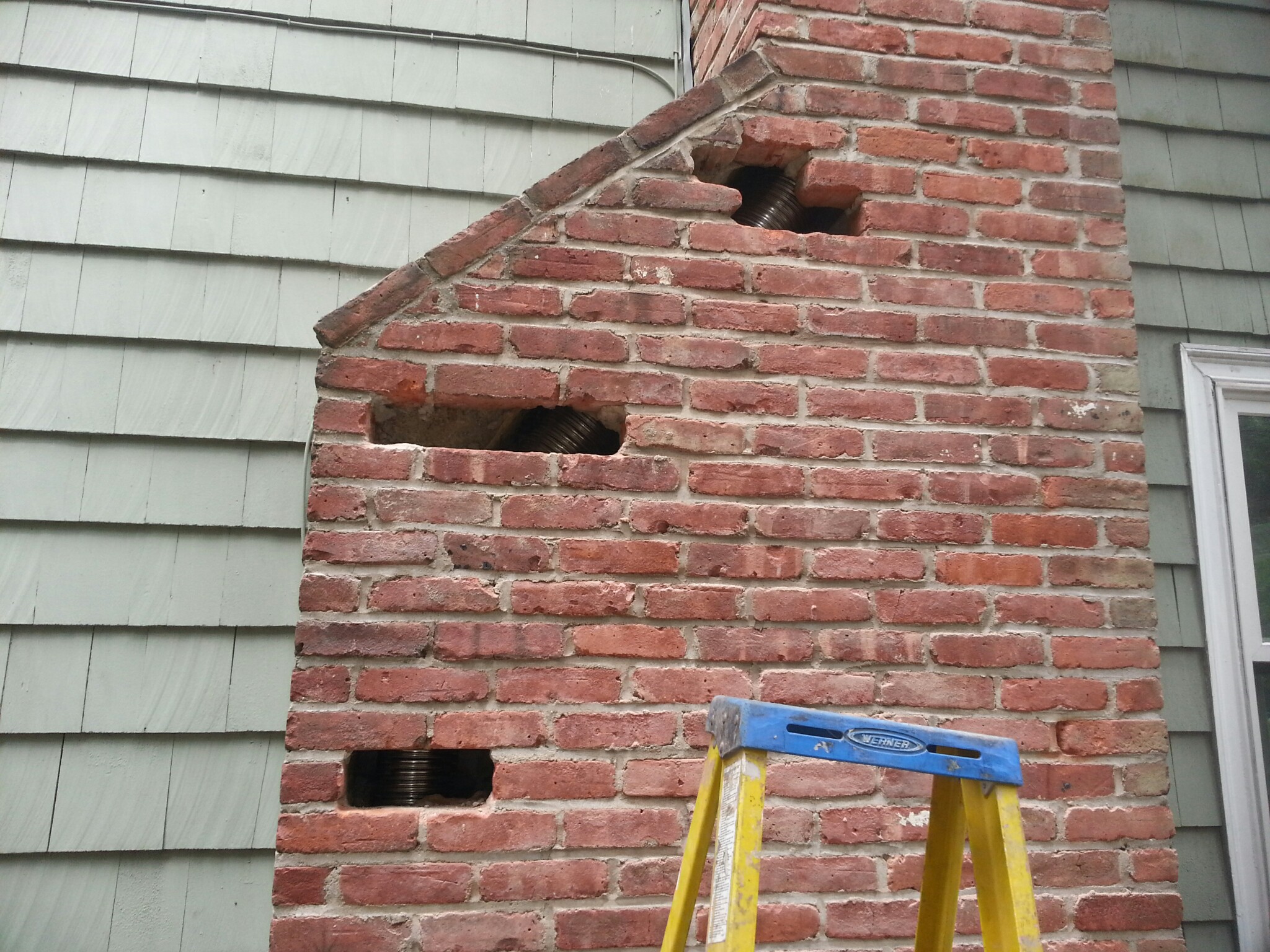
Brick damage represents another significant repair category we encounter frequently in Albertson properties, and it's often interconnected with mortar joint failure. Individual bricks, particularly those exposed to weather on the exterior faces of chimneys, can develop spalling—a condition where the outer layer of the brick begins to break away or flake off. This happens because water penetrates the brick itself, freezes, and expands, eventually dislodging fragments of the brick's surface. Residents of Albertson with older homes sometimes describe it as their chimney "crumbling," though it's actually a fairly predictable consequence of masonry aging in our climate. The concerning part is that once spalling has begun, it accelerates.
Each cycle of freeze and thaw removes another small layer of brick, and before long, the structural depth of the brick is significantly compromised. We've seen cases where bricks have deteriorated so severely that they can be pressed inward with hand pressure—a clear sign that the chimney is losing its ability to safely contain combustion byproducts and protect the home from fire risk. Beyond the safety implications, compromised bricks allow water intrusion to penetrate even more deeply into the chimney system. Water doesn't just affect the exterior bricks; it seeps into the mortar joints, the chimney flue, and the interior structure, where it can cause invisible damage that undermines the entire system.
This is why we take brick damage seriously in our evaluations of Albertson chimneys, and why addressing it promptly, rather than waiting to see if it "gets worse", is almost always the smarter choice.
Water intrusion is perhaps the most insidious problem we encounter in Albertson chimneys, because it often progresses silently for months or years before homeowners notice obvious signs of damage. A leaking chimney doesn't always announce itself with dramatic water stains on the ceiling or walls. Instead, it might manifest as a faint musty smell in the attic, subtle discoloration on the interior face of the chimney breast, or reduced efficiency because moisture is affecting your system's draft and function. In Nassau County, NY, where humidity is relatively high even in winter months due to our proximity to the Atlantic Ocean and Long Island Sound, chimneys are battling moisture from multiple directions. Rain enters from above and is driven by wind against the chimney's exterior.
Moisture wicks up from the ground through the foundation and chimney base. Humidity in the air condenses on cool masonry surfaces, particularly on the interior of the flue. For homes in Albertson that rely on oil heating systems, water in the chimney becomes an especially serious issue because it can affect draft, interfere with proper combustion, and create corrosive conditions that degrade the flue lining. Homeowners sometimes notice that their heating system seems to work harder or less efficiently, without realizing that chimney water intrusion is the root cause.
Our approach to water intrusion in Albertson properties involves identifying the specific pathways that moisture is taking into your system—whether through failed crown mortar, damaged brick, missing or deteriorated flashing where the chimney meets the roof, or gaps around the chimney base—and then addressing each of those vulnerabilities comprehensively. Patching one problem while ignoring others is like bailing water from a boat with multiple holes; you might slow the leak, but you won't stop it.
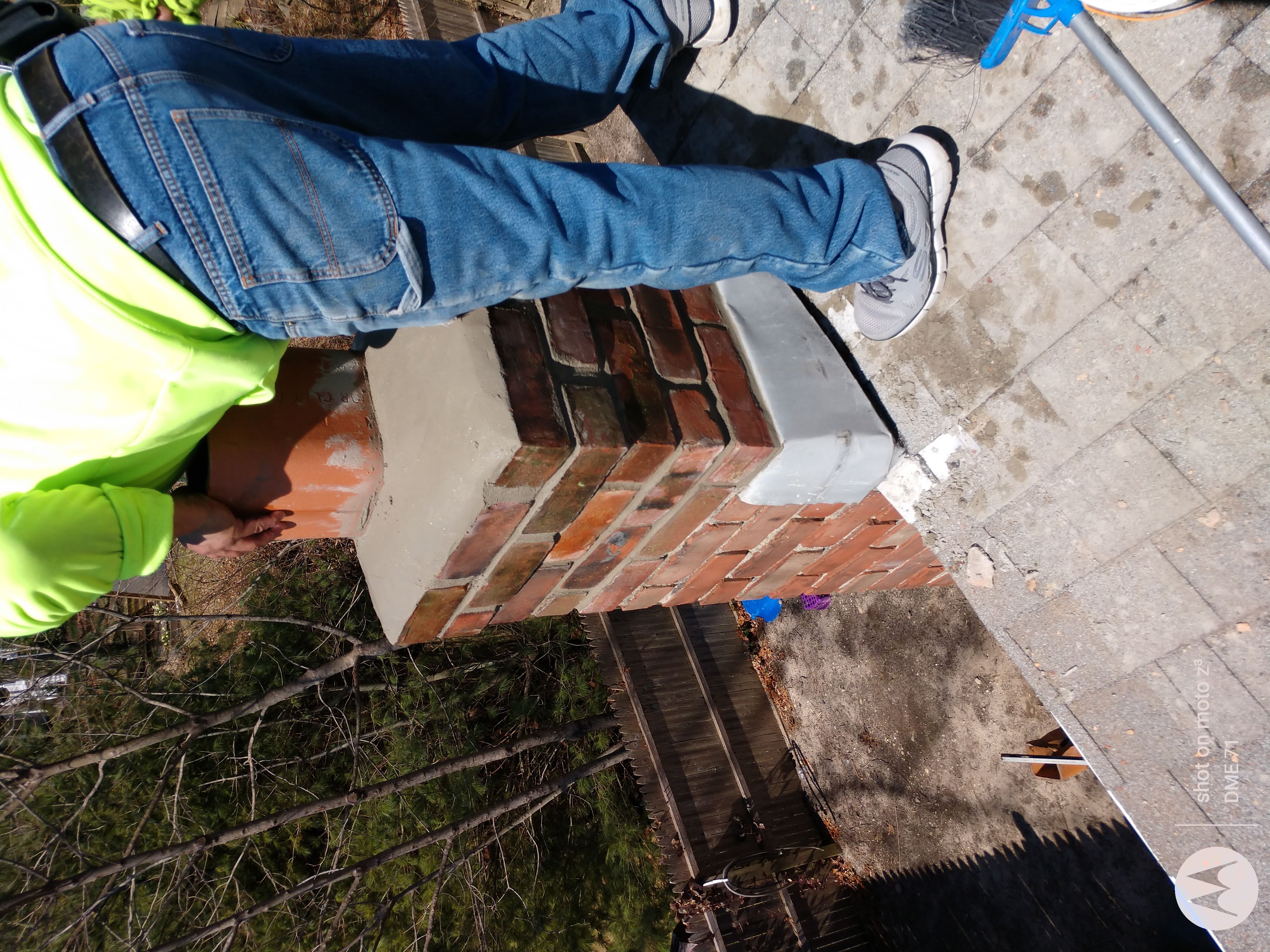
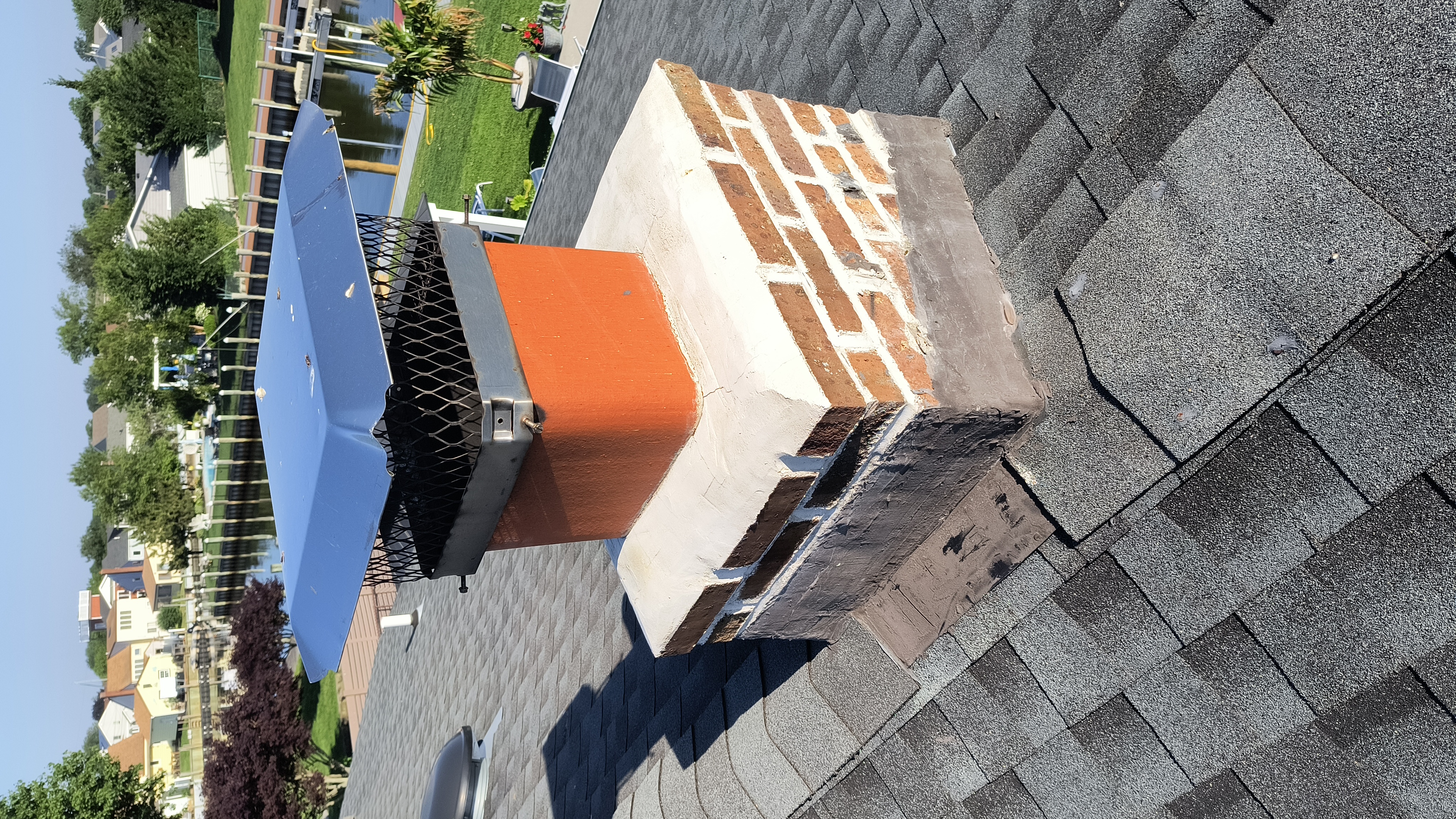
Structural integrity is the foundation—literally and figuratively—of everything we evaluate when we assess a chimney in Albertson. A chimney that looks reasonably intact from the curb might have serious structural compromises that aren't visible without a careful, professional inspection. We look at plumb, whether the chimney is straight or leaning, because even slight deviations can indicate foundation settlement or structural shifting that demands attention. We evaluate the condition of the brick coursing, the pattern and alignment of brick rows, which can reveal if stress has caused bricks to shift or crack. We inspect the chimney crown, which is the cap at the very top of the structure, because cracks or deterioration there are gateways for water to enter the entire system. Examination of the flashing.
For residents of Albertson living in homes built before the 1980s, we're particularly attentive to whether the original flashing is still intact or whether it has been compromised by age, prior repairs, or roof work. We check the condition of the chimney base and the foundation beneath it, because if the foundation is settling or moving, the chimney, which is a heavy, rigid structure, will move with it, and that stress can create cracks, gaps, and vulnerabilities throughout the system. A structurally sound chimney should be able to withstand Nassau County, NY's weather extremes year after year, from the nor'easters that pound our coastline to the freeze-thaw cycles of winter to the intense summer sun that cycles the masonry through temperature swings.
If you own a home in Albertson and haven't had your chimney professionally evaluated in recent years, or if you've noticed any signs of deterioration—missing mortar, cracked bricks, water stains, drafting issues, or that musty smell when heating season begins—the time to address it is now, before the heating season intensifies and before these problems escalate further. DME Maintenance brings more than two decades of experience serving Albertson and the surrounding communities of Nassau County, NY, and we understand the specific challenges that Albertson homeowners face with chimney maintenance in our regional climate.
DME Maintenance is a Long Island-based, owner-operated chimney company serving Albertson and the surrounding area. We regularly service homes in every part of Albertson — whether your home is just off the main road or tucked into a quiet residential street, Douglas knows the area and will arrive on time.
We're not here to oversell you on repairs you don't need, but we are committed to helping you understand exactly what your chimney's condition is and what needs to be done to keep your heating system safe, efficient, and reliable. Call today at 516-690-7471 to schedule a comprehensive chimney evaluation. DME Maintenance will give you a clear, honest assessment of your chimney's condition, explain what we find, and discuss options for addressing any issues we discover. Whether you need mortar repointing, brick replacement, flashing repair, or complete chimney restoration, we're ready to help. Don't let a manageable chimney repair problem become a major one. Call DME Maintenance at 516-690-7471 and let's protect your Albertson home for years to come.
For chimney service in Albertson, call AlbertsonChimney.com at 516-690-7471.